As we grow older, our bodies undergo changes that make us more vulnerable to the dangers of heat and dehydration. What might be a warm, sunny day for some can pose serious health risks for older adults—especially during the hottest part of the day.
With rising temperatures and stronger UV rays during summer months, two simple but powerful habits can help older adults stay safe and healthy: staying well-hydrated and avoiding the mid-day sun.
In this blog post, we’ll explore why hydration is especially critical for seniors, how aging affects the body’s response to heat, and what you or your loved ones can do to stay protected, energized, and comfortable.
Remember, Atlantic Caregiving do offer Welfare checks to ensure the well-being of your loved ones. Call us for more information.
The Aging Body and the Hidden Risks of Heat
Aging changes the way our bodies regulate temperature and respond to thirst, making seniors especially vulnerable during hot weather. Key risk factors include:
- Reduced Thirst Response
- Lower Fluid Reserves
- Slower Heat Regulation
- Effects of Chronic Conditions and Medications
Why Hydration Is Even More Critical for Seniors
Staying hydrated supports temperature regulation, kidney function, and mental clarity. Yet dehydration in seniors often goes unnoticed until it becomes severe.
Common Signs of Dehydration:
- Dry mouth, fatigue, confusion, dizziness, and dark urine.
Mid-Day Sun: A Peak Danger Zone
Sun exposure between 10 a.m. and 4 p.m. significantly increases the risk of:
- Heat Stroke
- Sunburn and Skin Damage
- Medication-Induced Sun Sensitivity
🥤 Practical Hydration Tips for Seniors
- Drink Regularly – Don’t wait until you’re thirsty.
- Flavor Water – Use lemon or cucumber slices.
- Eat Water-Rich Foods – Watermelon, cucumbers, etc.
- Keep Water Accessible – Use reminder bottles or set timers.
- Monitor Medication Effects – Some cause fluid loss or increase sun sensitivity.
☀️ How Seniors Can Safely Avoid Mid-Day Sun
- Plan Outdoor Time in Early Morning or Evening
- Stay in the Shade or Use Umbrellas
- Wear Protective Clothing and Sunglasses
- Use SPF 30+ Sunscreen
- Seek Air Conditioning or Cool Public Spaces
📈 How Humidity Affects the “Feels Like” Temperature
Humidity doesn’t just make things muggy—it makes hot temperatures feel much hotter, especially dangerous for older adults.
Below is a graph illustrating how higher humidity levels dramatically increase the perceived temperature (heat index), even when the actual air temperature remains the same.
🌡️ Heat Index Chart
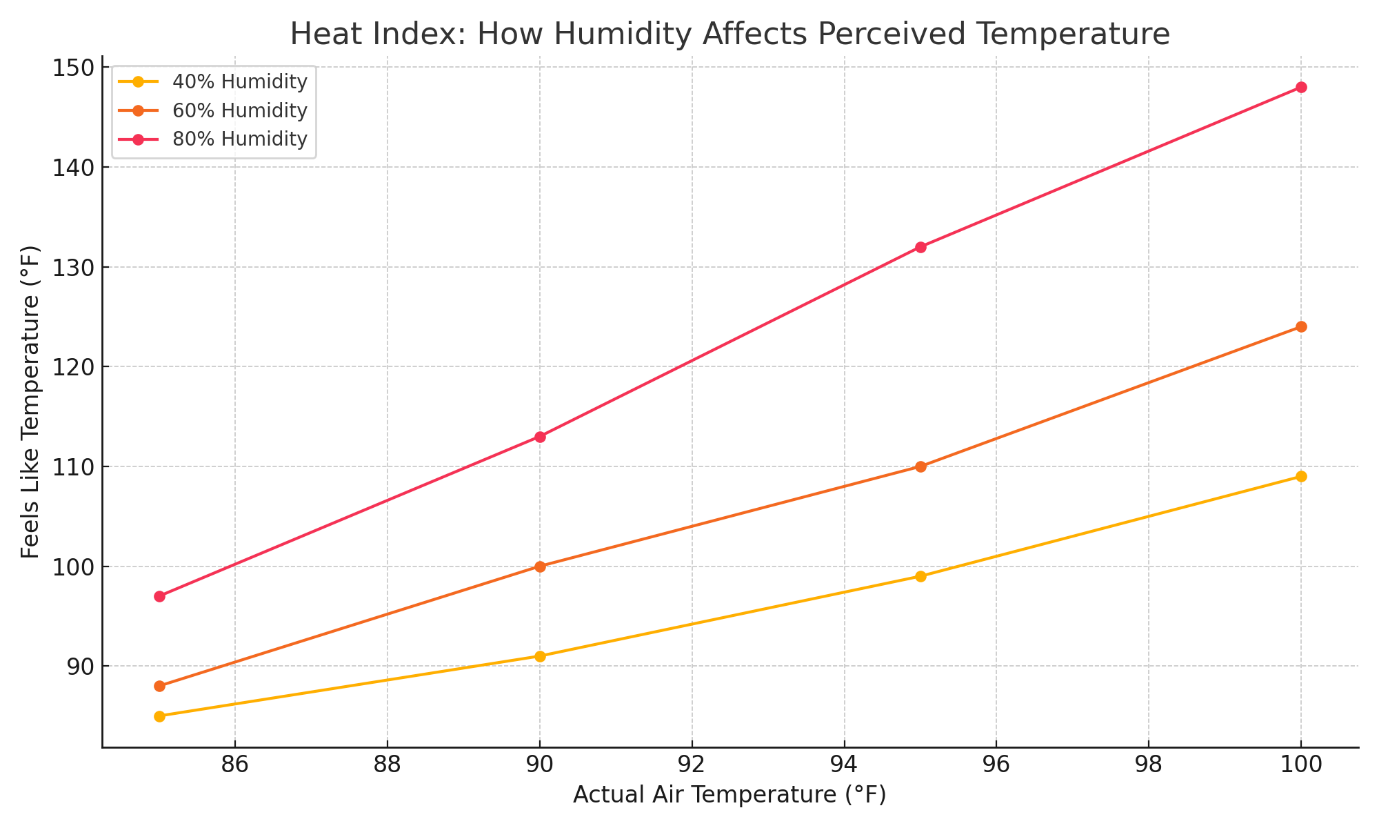
What This Means:
At 95°F:
- 40% humidity feels like 99°F
- 60% humidity feels like 110°F
- 80% humidity feels like 132°F
This is why seniors should avoid outdoor activity during hot, humid weather, even in the shade.
👵🏽 A Note to Caregivers and Families
- Check in daily
- Encourage fluid intake.
- Help seniors avoid peak heat hours.
- Monitor for signs of dehydration.
Staying hydrated and minimizing sun exposure can help seniors:
- Avoid serious heat-related illness
- Maintain energy and clarity
- Prevent dizziness and falls
- Enjoy summer safely
Remember:
- Drink water often—even without thirst
- Stay indoors or in shade from 10 a.m. to 4 p.m.
- Use sunscreen and protective clothing
- Watch for warning signs of heat stress
- Call a caregiver provider to help with welfare checks and or caregiving services
A little awareness can go a long way toward a safer, healthier summer for seniors.